- Address:
26 Elizabeth St, South River, NJ 08882
- Email:
mail@truck-repair-nj.com
- Phone line:
+1 (347) 656-62-73
The charge air cooler works through repeated heating, cooling and road movement. Its core has to transfer heat while its joints retain the compressed intake air. A replacement installed with deteriorated supports can face the same damaging conditions as the part it replaced.
For charge-air cooler and intercooler concerns, contact Truck Repair Shop in South River, NJ. Our engine-service assessment considers the cooler alongside its hoses, connections and supports. The discussion below concerns air-to-air systems, where outside air removes heat from the compressed air passing through the core.
Charge air cooler repair under repeated heat cycles
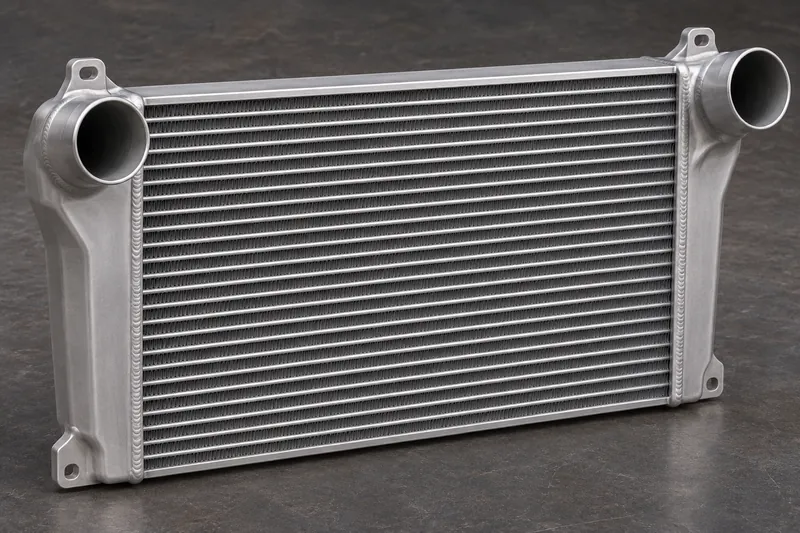
Hot air from the turbocharger heats the cooler, and its metal expands. As it cools, it contracts. The mounting design needs to accommodate the intended movement while supporting the assembly. A cooler forced into alignment or constrained by an incorrect mounting arrangement can be exposed to loads it was not designed to carry.
Garrett’s technical guidance explains that isolation helps damp vibration and accommodates thermal expansion. That is a mounting principle, not a recommendation to add loose rubber washers or change the truck’s original arrangement. The specified isolators, brackets and fasteners must work together.
When a crack is found near a tank, header or mounting point, the surrounding installation deserves attention as well as the leak. A replacement decision should include the condition of those supports and the alignment of the connected piping.
When the outside gets packed with debris
Leaves, insects and accumulated dirt obstruct the passages between the cooling fins. This affects the outside airflow that carries heat away. A leak check assesses containment of compressed air; it does not measure heat transfer through a dirty or damaged fin surface.
Cleaning must suit the installed cooler. Spartan’s chassis service manual, for example, warns that high-pressure air, high-pressure water and caustic cleaners can damage it. More force is not automatically a better cleaning method. Access, fin condition and the manufacturer’s instructions determine the appropriate approach.
Where debris affects several heat exchangers in the cooling package, our truck radiator service explains the wider airflow and cooling assessment.
Road movement tests more than the core
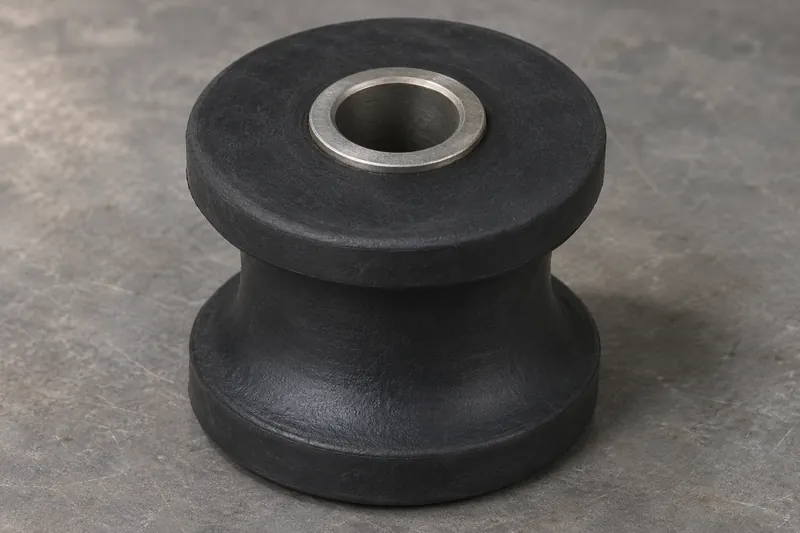
Brackets and isolation components keep normal road shock from being transmitted directly into the cooler assembly. Deteriorated rubber, loose attachments or contact between parts can change that protection. Inspection looks for wear, cracks and interference in the arrangement actually fitted.
The charge-air plumbing also needs room to function as designed. A worn hose, damaged tube or leaking coupling can require attention even when the cooler itself remains serviceable. Checking these connections prevents a repair estimate from treating the entire route as one failed component.
If an earlier cooler or hose repair was followed by another leak, bring that history into the assessment. Repeated damage in the same area is a reason to examine the mounting and pipe alignment, rather than authorize another identical part change without reviewing the installation.
How a CAC pressure test narrows the repair
For an isolated cooler test, the air connections are sealed with the appropriate test equipment and the cooler is checked under controlled pressure. Test fixtures must be secured as directed. The pressure, observation period and permitted loss come from the applicable specification; a generic internet figure is not an acceptance rule for every unit.
The result needs to identify what was tested: the cooler itself or a larger section of the installed air path. A leaking hose connection and a damaged core lead to different repair scopes. Findings may support connection or hose work, or intercooler replacement where the cooler is damaged beyond its permitted service limits.
After the agreed work, the relevant leak check and assessment of the reported operating concern establish whether that scope has resolved the problem. Low boost alone does not prove that the CAC is defective.
After an upstream failure
A turbocharger failure can introduce a different question: whether the cooler is permitted to go back into service. Exterior cleaning does not address material that has entered the internal air passages.
Reuse rules depend on the product and failure. Dura-Lite states that its oil-contaminated coolers must not be cleaned and reused, and its guidance rejects reuse after a turbo failure. We check the requirements for the fitted unit rather than promise that flushing will make every cooler suitable for another installation.
Arrange an assessment in South River
When calling about CAC repair, describe the truck’s work and when the concern appears: after warming up, on a loaded pull or following a recent repair. Include any recorded warning and previous leak-test report. Mention turbocharger damage or contamination before the repair scope is discussed.
Call (347) 656-6273 to discuss the visit with Truck Repair Shop. Have the truck and engine details available, together with any safely accessible cooler identification. We can use that information to plan an assessment of the installed system at our South River workshop.
Service terms
CLEAR ESTIMATES
Inspection findings, the proposed work and the estimate are discussed before repairs begin.
PARTS OPTIONS
We agree on suitable parts for the engine, the work and your budget.
FREE DIAGNOSTICS WITH REPAIR
Diagnostic work is free when you proceed with the repair.
WARRANTY FOR WORK
Our repairs carry a warranty. We explain the terms that apply to your job.