- Address:
26 Elizabeth St, South River, NJ 08882
- Email:
mail@truck-repair-nj.com
- Phone line:
+1 (347) 656-62-73
Send the complete inspection report when arranging repairs. A brake measurement needs the actuator identification that makes the measurement meaningful. A lighting entry needs the lamp position and failed function. Those details turn a broad request to “fix the inspection defects” into a job that can be assessed and checked against the reported condition.
Truck Repair Shop provides brake, lighting and electrical repair in South River, NJ. Call (347) 656-6273 with the report and truck details so we can review the mechanical concerns and discuss the work. If the vehicle has an out-of-service notice, follow the issuing authority’s movement instructions when arranging its arrival.
Standard-stroke and long-stroke brake chambers
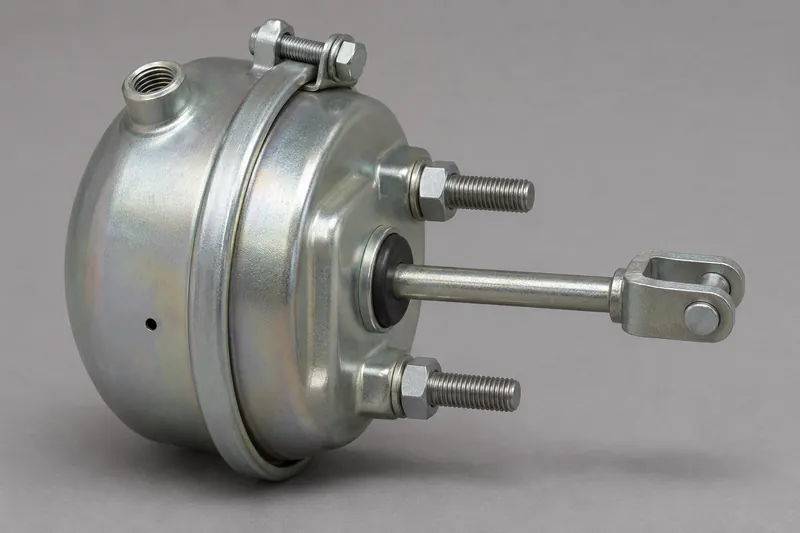
For clamp-type air brake chambers, the chamber size alone does not settle the applicable stroke limit. The standard-stroke and long-stroke versions have separate entries in the federal readjustment table. For example, 49 CFR 393.47(e) lists 2 inches for a standard-stroke Type 30 chamber and 2½ inches for a long-stroke Type 30 chamber.
That comparison explains why a reported pushrod-travel value must stay connected to the identified actuator and wheel position. These are specific readjustment limits; an out-of-service determination also requires the applicable inspection criteria. A number copied from another chamber type cannot establish the repair scope for this truck.
We relate the report to the installed brake equipment, inspect the affected mechanism and explain the corrective work supported by the findings. Our truck brake repair service covers the related brake-system work. Keep any recorded test conditions or inspector comments with the measurement.
The cause can extend beyond the adjuster
An excessive-stroke finding on a brake with an automatic slack adjuster calls for investigation of the adjustment problem. Manufacturer guidance identifies the adjuster, its installation and connected foundation-brake components as possible sources. Turning the adjustment mechanism to obtain a shorter reading can conceal the condition that needs repair. The corrective decision should identify that condition.
One rear lamp can perform several functions
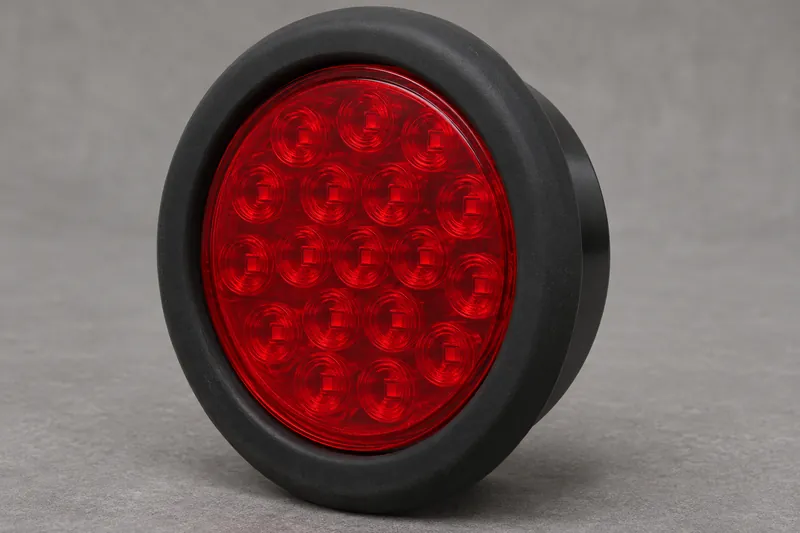
A rear combination lamp may provide stop, tail and turn functions in one housing. Grote’s product information documents that arrangement in both incandescent and LED designs. Seeing a red lamp illuminate in the tail-light mode therefore leaves the stop and turn functions to be checked separately.
The report should identify which function failed and where. The investigation then follows that function through its supply, ground, connections and controls. A lamp fault and a circuit fault can require different corrective work. Our truck lighting service covers the lamp and related electrical assessment.
Replacement selection also needs more than a matching diameter. Grote’s data sheet shows visually similar lamps with different operating-voltage ranges and specifies their connection type. The fitted application determines the appropriate lamp, connection and mounting. Completion checks need to exercise each required function of the repaired assembly.
DOT out-of-service repair covers every required item
Keep the entire notice available, including the unit identification and every listed defect. CVSA’s operational policy explains that when several violations contribute to an out-of-service condition, all contributing violations must be repaired. Correcting one wheel position does not account for another cited position that remains defective.
The same policy states that a correction cannot create a new violation elsewhere. The repair scope must preserve the required condition of the whole affected system, rather than transfer a needed component from another location merely to fill the reported gap.
An appointment or repair estimate does not authorize movement of an out-of-service vehicle. Arrange the permitted recovery or movement with the issuing authority’s directions in view. Tell us where the truck is located and what the notice says before planning its arrival at our shop.
Keep the repair record tied to the report
For each agreed repair, the useful connection is between the cited item, the equipment found on the truck, the corrective work and the resulting check. A brake entry needs the relevant position and applicable assessment; a combined lamp needs the functions checked. A general statement that the truck was repaired loses those distinctions.
The motor carrier remains responsible for reviewing the roadside report and completing the carrier certification required by 49 CFR 396.9. Repair information supports that process. Any inspection, reinspection or decal procedure follows the requirements of the issuing agency and the relevant inspection program.
Bring the complete report to the repair discussion, including attachments and previous work relating to the cited items. We will explain the findings for the truck’s brake, lighting or electrical concern and agree on the corrective work before proceeding.
Service terms
CLEAR ESTIMATES
Inspection findings, the proposed work and the estimate are discussed before repairs begin.
PARTS OPTIONS
We agree on suitable parts for the engine, the work and your budget.
FREE DIAGNOSTICS WITH REPAIR
Diagnostic work is free when you proceed with the repair.
WARRANTY FOR WORK
Our repairs carry a warranty. We explain the terms that apply to your job.