- Address:
26 Elizabeth St, South River, NJ 08882
- Email:
mail@truck-repair-nj.com
- Phone line:
+1 (347) 656-62-73
An EGR repair order may include more than a valve or a cooler. Access work, inspection of connected passages and protection of open connections can matter to the result. Each operation should have a purpose that can be explained, rather than disappearing into a vague description of an “EGR job.”
Our South River shop handles EGR assessment and component repair. Discuss the affected parts and related operations with Truck Repair Shop. Here is how to read that scope: separate the components, identify where deposits matter, protect the gas path and establish why a cooler needs replacement.
EGR valve and cooler work should be named separately
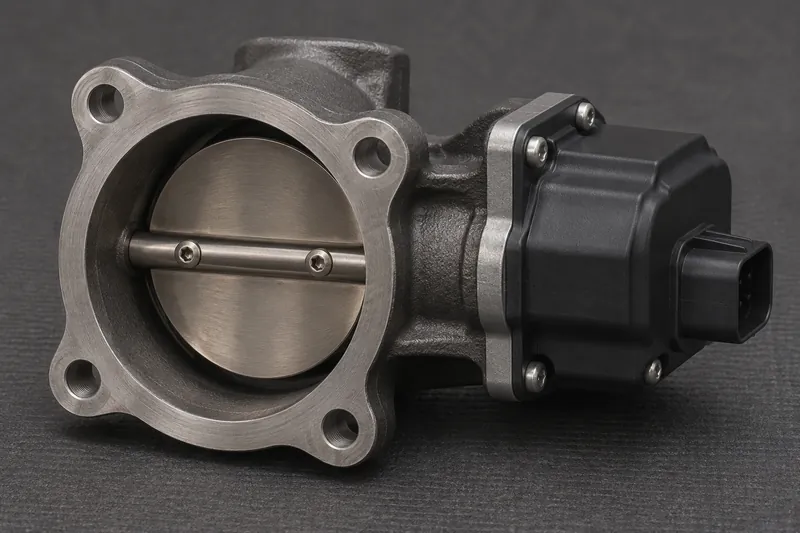
The valve controls recirculated exhaust flow. The cooler transfers heat from that exhaust to the engine coolant. A movement problem and an internal coolant leak therefore describe different repair concerns; the presence of one does not by itself establish the other.
The actuator and its connection to the valve also deserve separate attention. Detroit’s GHG17 actuator-fault procedure, for example, distinguishes obstructed linkage travel, damaged linkage bearings and a valve that cannot move through its intended range. Its checks can lead to different component repairs.
That distinction belongs in the explanation you receive. “Valve binds,” “linkage is damaged” and “actuator does not respond” name different findings. The installed arrangement determines how those findings are checked and which associated parts must be disturbed.
A cleaning line needs a location and a method
Ask what is being cleaned. A blocked measuring port is a different job from deposits inside a large transfer pipe. In one Detroit GHG17 pressure-path diagnostic, the instructions specifically inspect the delivery pipe’s differential-pressure ports for blockage. Another step addresses excessive buildup in the connected EGR piping.
Those are useful distinctions because a new component does not automatically clear a blocked passage beside it. Where the engine procedure calls for passage cleaning, the repair scope should identify that location and the permitted method. Deposits elsewhere, a stuck mechanism and a leaking cooler should not all be described as the same cleaning operation.
There is no single cleaning interval or chemical treatment to apply to every heavy-duty engine. The condition found and the instructions for that assembly determine whether cleaning belongs in the job.
Keep wash chemicals out of the gas path
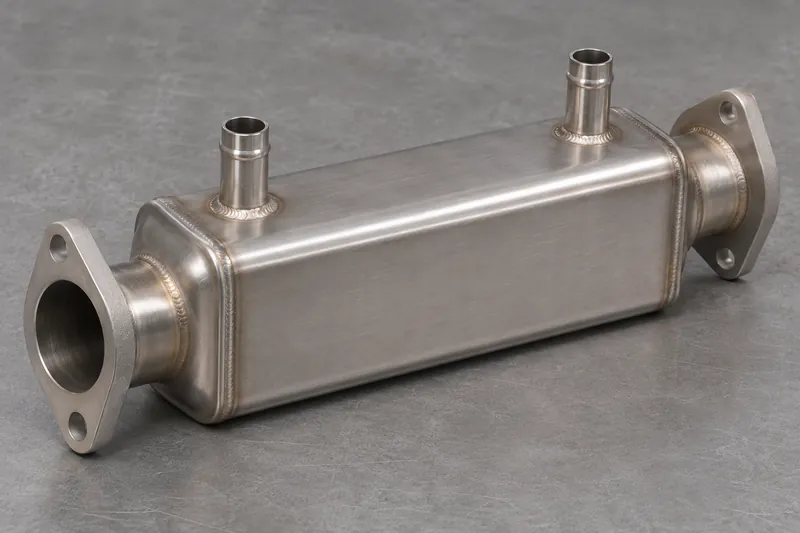
Cleaning can itself create a problem when material reaches the wrong side of the cooler. Cummins has documented internal corrosion on X12 and X15 coolers after wash water, soaps or cleaning chemicals entered the air-handling system and contaminated the cooler’s gas side. Water can carry salts and other contaminants to the metal surfaces.
This is a reason to control contamination during service, not an instruction to flush the assembled exhaust path. Open connections need protection, and the cleaning product and method must suit the operation. A chemical wash is not a repair for a breached internal tube.
The concern described here is contamination carried into the gas passage. It should not be confused with coolant selection or used to justify adding a cleaner to the cooling system.
EGR cooler replacement needs a recorded reason
For a suspected internal leak, the useful finding is that the cooler failed its applicable test. A historical Detroit DD15/DD16 procedure makes an important distinction: when test pressure falls, the test connections and fixture must be checked for external leakage before the cooler is condemned.
The current engine procedure governs the setup, temperature, pressure and duration. One engine’s test values should not be borrowed for another cooler. A sound explanation identifies what was tested and where the loss occurred; a pressure drop alone leaves part of that explanation missing.
If the cooler passes, coolant loss still needs an explanation elsewhere. Engine and vehicle cooling components remain part of that investigation. Our truck cooling system service page covers the wider circuit when the concern extends beyond the EGR assembly.
Bring the previous repair order
A record of earlier valve, cooler or pipe work can show which parts and passages have already received attention. Bring that record when arranging a visit, along with the engine identification and any documented coolant loss. It helps us discuss the present job without treating “EGR replaced” as a description of every operation.
Call (347) 656-6273 to arrange EGR assessment and repair at our South River shop. We can work through the findings with you and explain the proposed component work and related operations before you decide how to proceed.
Service terms
CLEAR ESTIMATES
Inspection findings, the proposed work and the estimate are discussed before repairs begin.
PARTS OPTIONS
We agree on suitable parts for the engine, the work and your budget.
FREE DIAGNOSTICS WITH REPAIR
Diagnostic work is free when you proceed with the repair.
WARRANTY FOR WORK
Our repairs carry a warranty. We explain the terms that apply to your job.