Why Does a New Serpentine Belt Still Squeal on a Truck?
Compare the old noise with the new one and check belt alignment, tension and pulley condition
Suppose the new belt chirped from the first start. Tell the shop whether that is the same sound it made before. If it stayed quiet for a few days and then started squealing, mention the gap. A belt change leaves the pulleys, brackets and any oil leak in place, so the timing helps decide what to look at next.
The next useful comparison is the sound itself. A rhythmic chirp, a sustained squeal and a bearing rumble lead to different checks, even when all three seem to come from the same area.
Truck belt squeal versus a rhythmic chirp
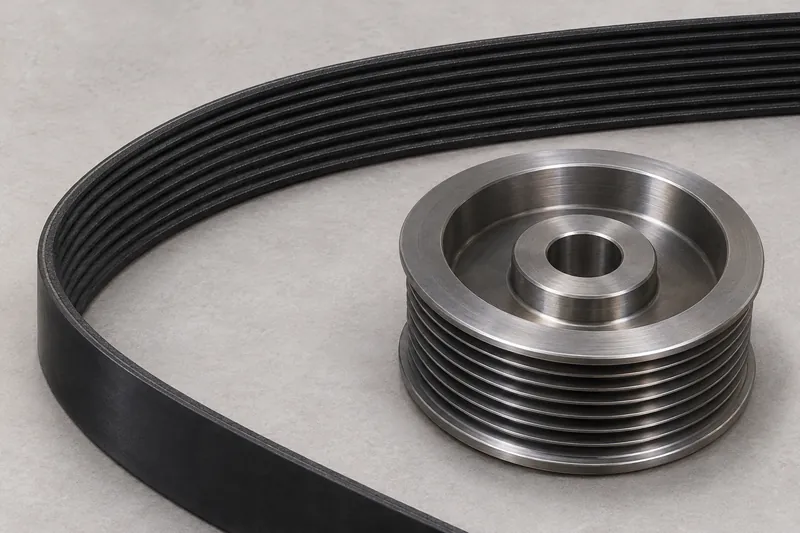
A chirp repeats in short pulses. Pulley alignment is an important line of investigation. As the ribs enter a pulley at an angle, uneven contact can create the repeated noise. Bearing movement or an installation problem can put a pulley out of line. Simply fitting another belt leaves that geometry unchanged.
A squeal lasts longer. Relative slip between the belt and pulley is a different mechanism. Insufficient tension, contamination or excessive resistance at an accessory can contribute. The sound may become more noticeable as operating load changes, but that observation does not identify which component needs replacement.
Cold or damp conditions are useful details to report, not a diagnosis. Gates’ heavy-duty guidance notes that humidity can also make misalignment noise more likely. A recording already made from a safe location can help describe the rhythm; do not move a phone or listening tool toward a running belt.
The same sound, or a different one?
Compare what you heard before the replacement with what happened immediately afterward. If the identical chirp remained from the first start, the original alignment or bearing concern may still be present. If a new noise appeared, check the work that changed: belt selection, seating, routing and any disturbed mounting parts.
The installed part must suit the actual drive arrangement. Length and rib count matter, and the belt must sit correctly in its intended grooves. A tensioner is not a remedy for an incorrect belt or route. Use the applicable vehicle and engine information to verify the installation rather than choosing a shorter belt to force more tension.
A short quiet period followed by recurrence is another pattern. Look for fresh contamination, abnormal tracking or unresolved wear in the surrounding drive. Dayco identifies incomplete seating, damaged pulleys and bearing-related belt movement among causes of early failure after installation. Keep the replacement invoice and part number available for that comparison.
When switching on A/C changes the noise
If the truck belt squeals when A/C is selected, report the timing precisely: does the noise begin as the system engages, continue throughout operation, or occur independently with A/C off? A change in accessory load can expose a drive problem. Compressor replacement requires further evidence from the affected system.
The investigation compares the belt’s ability to transmit that load with the condition of the driven component. Tension, traction and pulley condition remain relevant alongside the compressor drive and controls. The accessories sharing a belt vary by truck; do not assume that every engine uses the same route or drives its steering and cooling equipment from that belt.
If the sound starts when the A/C kicks in, tell us whether the cab still cools. Truck Repair Shop LLC provides truck A/C diagnosis and repair in South River. A squeal as the load comes on gives us a reason to inspect the belt drive as well as the compressor.
Heavy-duty truck belt tensioner noise needs its own check
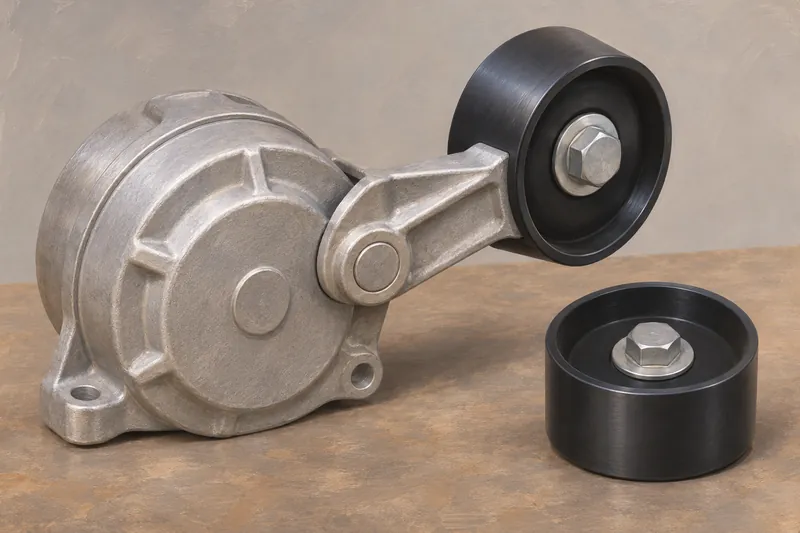
A tensioner assembly includes more than the roller the belt touches. On an automatic design, the arm and spring mechanism manage belt tension while the pulley bearing allows rotation. A noisy bearing and an arm that sticks are different faults, even though either can be described as a bad tensioner.
With the engine stopped and the belt released according to the service procedure, a technician can assess pulley condition and tensioner movement. Rough rotation, play, notchy arm travel, damaged stops or contact between the arm and housing are findings to document. Dayco’s heavy-duty tensioner guidance treats these as separate signs of wear or malfunction.
A low growl or grinding sound also deserves a bearing check instead of being labelled belt squeal. Idlers and accessory pulleys remain part of that inspection. Hand checks and any further testing must follow the component’s design; judging a pulley only by how long it spins is not a complete assessment.
Quieting it is not the repair
Belt dressing does not correct alignment, a sticking tensioner or a leak. Dayco advises against using it to solve serpentine-belt noise and calls for replacement of an oil-soaked belt. Finding the fluid source matters too: another clean belt can become contaminated again if the leak remains.
The tensioning method also changes the repair. A manually adjusted drive needs its specified setting and any required recheck. An automatic tensioner needs the correct assembly and installation, not an improvised adjustment or extra preload. There is no universal thumb-deflection rule or tension value for every truck.
Grinding, smoke, a burning smell, belt separation or an accompanying charging or temperature warning warrants stopping safely and arranging assistance. Do not keep running the engine to collect a better recording. Follow the truck’s instructions for the warning displayed.
Make the return visit specific
Bring the belt replacement record and explain the before-and-after pattern. Add when the noise occurs, how long it lasts, whether A/C selection changes it, and whether any pulleys or accessories were replaced at the same visit. Mention fluids or sprays applied to the belt, even if they quieted it temporarily.
Bring the invoice and ask what the technician found. A belt sitting one rib off, a pulley with play or fresh oil on the belt leads to a different job in each case. Arrange the visit through our South River shop contact page.