10W-30 vs. 15W-40 Diesel Oil: Can You Change Viscosity in Your Truck?
Check the engine’s approved viscosity and oil specification before switching grades
You can use 10W-30 in place of 15W-40 if your engine allows that grade and the oil meets its required specifications. Look at the back of the jug. Even two 10W-30 oils can carry different API categories and engine-maker approvals.
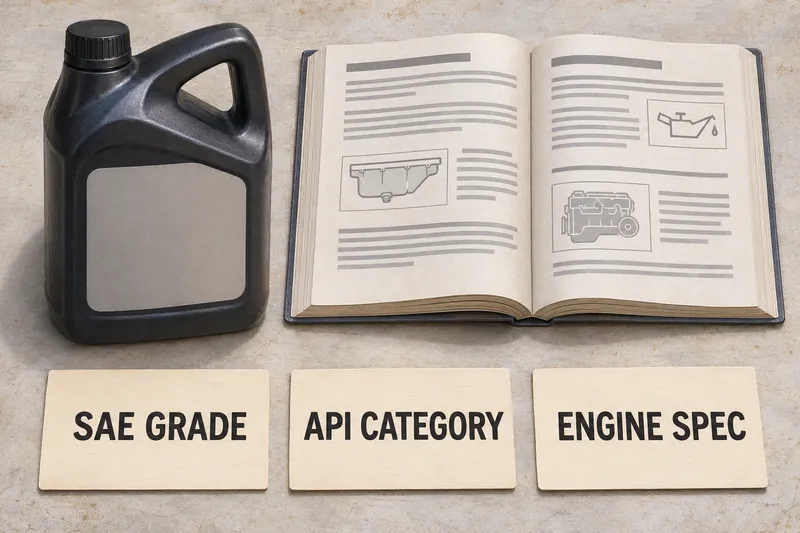
For the next service, write down three things from the label and check them against the engine manual. Look for the SAE grade, the API category and the engine maker’s specification. Those checks matter when the truck starts cold and again when it is hot and under load.
From a cold start to a working oil film

Viscosity describes resistance to flow. Cold oil offers more resistance than the same oil when hot, which matters when the engine first needs circulation. As temperature rises, viscosity falls. A multigrade lubricant is designed to meet specified requirements across that change; it does not become thicker as the engine warms.
At working temperature, the lubricant still needs to support an effective film in the engine’s loaded contacts. Excessive resistance consumes energy, while an unsuitable thin film can compromise protection. The engine manufacturer’s recommendation balances those demands for the particular design and operating conditions.
That is the engineering basis for an approved lower-viscosity oil. A potential reduction in friction or fuel use is useful only within the engine’s requirements. A fuel-economy claim on a product page is not permission to change the grade, and it is not a guaranteed saving for your route.
Reading 10W-30 and 15W-40 diesel oil grades
The W portion describes low-temperature performance, including standardized cranking and pumping requirements. A 10W winter grade meets requirements at colder test conditions than a 15W grade. The number is not an outdoor temperature: 10W does not mean the oil is suitable only at 10 degrees.
The second number describes the high-temperature viscosity grade. SAE 30 and SAE 40 occupy different viscosity ranges; 40 is the higher grade. These are classifications, not exact viscosity measurements, and they do not rank the overall quality of two products.
Use the viscosity chart for the actual engine and anticipated conditions. A generic diesel engine oil viscosity chart cannot replace model-specific instructions. For a truck based in New Jersey, consider its coldest expected starts and the conditions along its route, rather than selecting a grade solely from the temperature outside the shop today.
CK-4 vs FA-4: what changes under shear
Oil in a loaded contact experiences conditions beyond simply flowing through a laboratory tube. High-temperature, high-shear viscosity, usually shortened to HTHS, evaluates viscosity under hot, shearing conditions relevant to thin-film lubrication. Detroit’s lubricant guidance describes this separate test and its relationship to areas such as the piston-ring and cylinder-wall interface.
This is why two oils marked 10W-30 can belong to different diesel service categories. API FA-4 uses a lower HTHS viscosity range and is intended for selected compatible engines. API explicitly states that FA-4 oils are not interchangeable or backward compatible with CK-4 and the earlier diesel categories it lists.
Read the API category as well as the SAE grade. Neither a matching 10W-30 label nor a 2017-or-newer model year proves FA-4 eligibility. The engine maker’s instructions decide whether that category is suitable. Likewise, a passenger-car oil’s matching viscosity numbers do not establish that it meets a truck engine’s diesel performance requirements.
A manufacturer-specific example
Cummins’ X15 truck maintenance quick reference, bulletin 5544396 revised June 2025, identifies an ECM 2350-equipped configuration and states that 10W-30 and 15W-40 oils meeting Cummins specifications may be used. This is a documented example of both grades being permitted, with the specification requirement still attached.
Cummins also distinguishes CES 20086, associated with CK-4, from CES 20087, associated with FA-4, in its material for eligible X-Series OilGuard applications. Those specification numbers are another part of product selection; the viscosity alone does not replace them.
For a Cummins X15 oil viscosity change, match the applicable instructions to the installed engine and its identification. An X15 example does not authorize the same oil in every Cummins engine, every generation or another manufacturer’s truck. Check the exact product’s current technical information against the required specification.
Keep the product choice and service interval separate
Put the product name and those three label details on the service record. If the truck later starts using oil or shows a pressure change, the next technician can see exactly what went in.
A viscosity change or a synthetic label does not automatically lengthen the drain interval. The same Cummins quick reference cautions against extending intervals simply because synthetic or semi-synthetic oil is used. Any approved interval adjustment has its own requirements; a different jug does not create one.
If an engine operating concern is the reason for proposing a different grade, discuss it through diesel engine diagnosis and repair rather than treating the oil selection as a completed repair. Truck Repair Shop LLC in South River can assess the underlying engine concern. When contacting our shop, include the current oil product, the proposed replacement and the reason for the change so the conversation addresses the actual decision.