- Address:
26 Elizabeth St, South River, NJ 08882
- Email:
mail@truck-repair-nj.com
- Phone line:
+1 (347) 656-62-73
An engine can keep pulling while its oil use becomes a repair concern. On a Freightliner Cascadia with Detroit DD13, the work depends on where that oil is going and whether the fault has affected other components. Repeated top-ups deserve an explanation rather than an automatic overhaul recommendation.
At our South River, NJ shop, Truck Repair Shop investigates engine faults and carries out repairs. Our Freightliner repair service covers assessment of DD13 concerns and a discussion of repairs supported by the findings. Oil loss is the focus here; starting, running and cooling complaints also belong in the service request. If the agreed scope calls for a full DD13 rebuild, Truck Repair Shop offers that engine-overhaul service for Cascadia owners.
Cascadia has been offered with the DD13, but engine designs have changed across generations. A repair instruction for one version cannot be applied from the DD13 name alone. The examples below explain why the fitted engine and the particular failure matter.
DD13 oil-control ring damage begins at a specific location
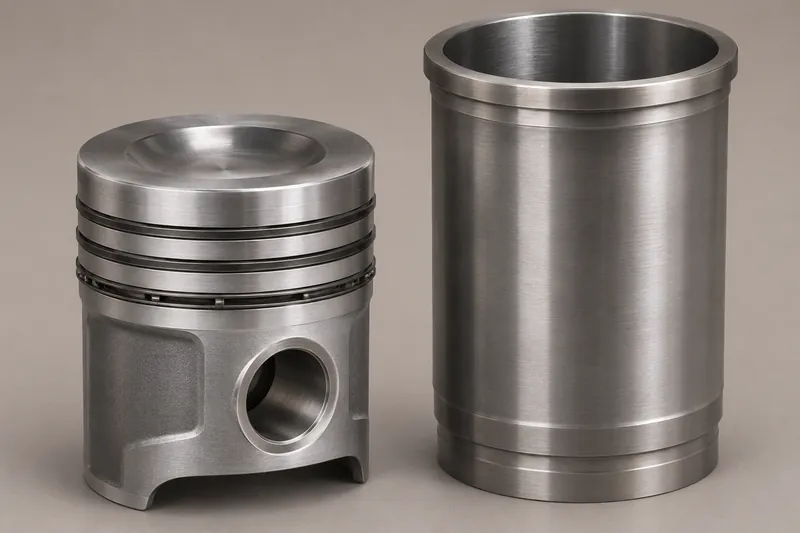
A ring must remain in its intended piston groove to do its job. Detroit documented a particular oil-consumption problem on some Gen 5 DD13 engines identified as 471952: an oil-control ring could move into a relief area below its proper groove during piston handling. In operation, the misplaced ring could wear prematurely or break.
The resulting damage can involve the piston and cylinder liner, with metal debris reaching the oil sump. This is a specific failure mechanism, not a diagnosis for every DD13 that uses oil. Detroit’s revised September 2023 guidance limits the issue to that engine version.
For that failure, low compression or elevated crankcase pressure may be absent unless cylinder damage has become extensive. Those readings therefore do not rule it out. The applicable investigation examines the evidence of oil use and the suspect cylinder condition instead of assuming that a truck which still runs well has no internal fault.
A local failure can affect the lubrication circuit
Internal damage may leave more to address than the visibly broken part. Detroit’s DD-platform major-failure guidance describes cylinder-kit, gear-train and overhead failures that contaminate the oil pan, filter and other parts of the engine with metal. Its repair procedures include attention to the lubrication circuit and affected components before further disassembly.
This changes the repair discussion. Replacing a damaged cylinder assembly and dealing with contamination are connected tasks. Cleaning and component replacement must follow the procedure for the actual failure; an oil change by itself does not establish that the consequences have been resolved.
That same guidance distinguishes repairable failures from damage that makes the cylinder block unrepairable. Finding debris is not, on its own, a reason to condemn the complete engine. The condition of the block and the related assemblies must support the recommendation.
DD13 oil-loss diagnosis also follows routes outside the cylinder
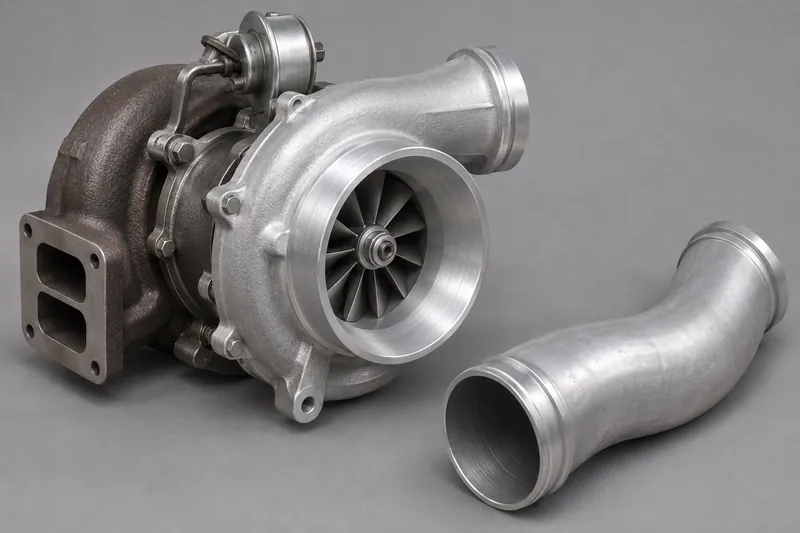
Oil can also leave through an external leak or appear in another system. Detroit’s earlier DD-platform oil-consumption procedure checks external leakage and oil contamination in coolant, then follows other findings through the appropriate crankcase, exhaust and intake inspections. This broader route applies to the engine versions covered by that procedure; it does not replace the specific Gen 5 guidance above.
For a covered DD13, the location of oil around the turbocharger and exhaust manifold helps direct the next inspection. The procedure separates turbocharger damage, inlet restriction, valve-related wear and cylinder damage. Oil found in one place is evidence to trace, not an instruction to order every component nearby.
If the assessment points to the turbo system, our diesel turbo repair page explains that related service. The engine repair plan should identify the demonstrated fault and any consequences that must be addressed with it.
Put the oil-use record beside the repair findings
Bring the quantities added and the distance covered between top-ups, along with oil-service invoices and any previous inspection report. Note whether oil loss began suddenly or increased gradually. These details give us a baseline for the complaint; an undocumented impression that it “uses a lot” is harder to evaluate.
Before authorizing work, discuss which component failed, what inspection supports that conclusion and why any additional parts are included. Checks after repair must address both the completed work and the original complaint. A brief idle cannot demonstrate a long-term change in consumption, so the follow-up record matters as well.
To arrange a Cascadia DD13 assessment, reach Truck Repair Shop at (347) 656-6273. Share the oil-use history and any accompanying warning, smoke or running change when booking your South River visit. We will discuss the investigation and proposed repairs around the condition of your engine.
Service terms
CLEAR ESTIMATES
Inspection findings, the proposed work and the estimate are discussed before repairs begin.
PARTS OPTIONS
We agree on suitable parts for the engine, the work and your budget.
FREE DIAGNOSTICS WITH REPAIR
Diagnostic work is free when you proceed with the repair.
WARRANTY FOR WORK
Our repairs carry a warranty. We explain the terms that apply to your job.