- Address:
26 Elizabeth St, South River, NJ 08882
- Email:
mail@truck-repair-nj.com
- Phone line:
+1 (347) 656-62-73
If your truck cooled well immediately after its last recharge and then gradually warmed up again, tell us that history when booking. It is a useful lead for the investigation. Adding refrigerant again without establishing why performance changed can leave the underlying problem unresolved.
Truck Repair Shop provides refrigerant service and leak diagnosis in South River, NJ, as part of our truck air conditioning repair. We assess the complaint, identify the work needed and explain the proposed repair. The conditions under which a leak or cooling problem appears help determine the checks.
The conditions behind a truck AC leak test
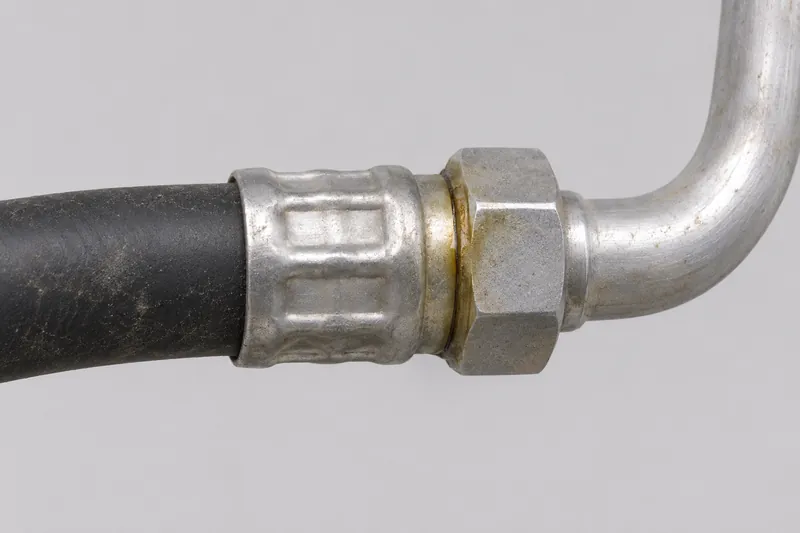
An inspection mark, a detector response and a cooling measurement provide different kinds of evidence. They should not be treated as interchangeable proof. A visible trace can identify an area to investigate, while a leak check needs to establish whether refrigerant is escaping.
The refrigerant in the circuit and the manufacturer’s service instructions matter when selecting a detection method. DENSO’s A/C service guidance also explains why relying on UV dye alone can miss leaks. The investigation must suit the system and the evidence found, rather than end with the first suspicious mark.
A trace of oil is a clue
Sanden’s SD compressor guide distinguishes oil seepage from confirmed refrigerant leakage. Oil near a compressor seal or fitting warrants investigation, but the appearance alone does not establish an active leak. Its detector guidance also distinguishes refrigerant actually flowing from a leak from a small amount trapped in a recess.
That distinction affects the repair decision. We explain what testing has established before recommending work on a suspected connection or component.
A dye check needs circulation
UV dye travels with system oil. Sanden notes that, when dye is added to a system without it, operation is needed for the stained oil to reach the leak. Some vehicles already contain factory-added dye, so adding more automatically is inappropriate.
DENSO identifies a further limitation: a refrigerant leak may not release enough oil for dye alone to reveal it. A negative UV inspection therefore does not rule out every leak. Mention any earlier dye treatment and provide the previous service invoice if available; that information helps avoid assumptions about what is already in the circuit.
Truck AC recharge after the circuit has been opened
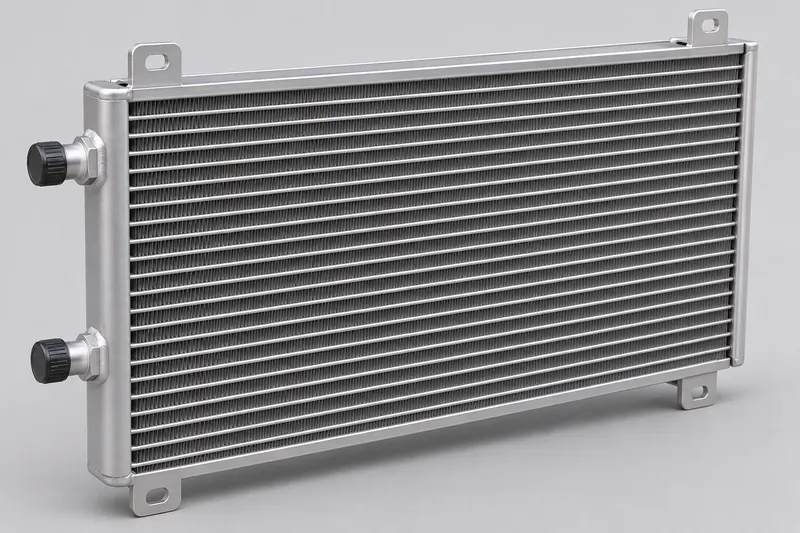
For an identified leak requiring the circuit to be opened, refrigerant service includes recovery of the remaining charge, the agreed repair, evacuation and charging to the vehicle specification. These operations have distinct purposes. Evacuation removes air and moisture before charging; it does not mend a damaged line or seal.
The specified refrigerant and measured charge quantity govern refilling. Gauge readings are also used to assess operation, but they do not replace the vehicle’s charge specification. There is no single refrigerant amount for every tractor or cab configuration.
Oil needs separate consideration when components are replaced. DENSO’s compressor installation guide directs technicians to vehicle data when adjusting a replacement compressor’s oil quantity, including applications with different evaporator arrangements. An automatic extra dose at every recharge is not a substitute for accounting for the required type and amount.
Let us know if a previous repair involved a compressor or other refrigerant-circuit component. Records of refrigerant, oil or additives already used are particularly helpful when the service history is unclear. Any additional work identified during inspection is discussed with you.
Judge the result under a defined heat load
A vent temperature needs context. Pierce’s truck HVAC diagnostic checklist records ambient temperature and humidity alongside system pressures at different points during operation. It is a useful manufacturer example of why a number taken without its test conditions tells an incomplete story; its chassis-specific limits are not universal truck specifications.
DENSO recommends establishing an outlet-temperature reference before service and checking operation afterward. Its assessment also includes condenser airflow, air mixing and the condition of the condenser area. Restricted heat rejection or unwanted mixing of warm air can affect the result even when refrigerant quantity is correct.
We evaluate cooling, airflow and controls under the conditions appropriate to the truck. Tell us whether weak cooling develops after the cab has stood in the sun, appears only after extended operation or affects particular outlets. These observations help connect the workshop findings with the complaint you experience.
Before the visit, gather the date of the last recharge and how long any improvement lasted. Call (347) 656-6273 to arrange A/C leak testing and refrigerant service at Truck Repair Shop. Our South River location and contact details will help you plan your visit.
Service terms
CLEAR ESTIMATES
Inspection findings, the proposed work and the estimate are discussed before repairs begin.
PARTS OPTIONS
We agree on suitable parts for the engine, the work and your budget.
FREE DIAGNOSTICS WITH REPAIR
Diagnostic work is free when you proceed with the repair.
WARRANTY FOR WORK
Our repairs carry a warranty. We explain the terms that apply to your job.