- Address:
26 Elizabeth St, South River, NJ 08882
- Email:
mail@truck-repair-nj.com
- Phone line:
+1 (347) 656-62-73
In a floating-caliper air disc brake, the pad on the far side of the rotor relies on movement of the caliper to develop its clamping force. That makes the guidance system part of braking, alongside the friction material. Understanding this relationship helps explain the work needed when a brake wears unevenly or stops releasing normally.
Truck Repair Shop offers air disc brake inspection and repair at our South River, NJ location. We assess pads, rotors, calipers and their connected hardware, then discuss which parts need attention and the proposed replacement work. The following explanation describes the floating-caliper arrangement; service details depend on the identified brake.
Inside the air disc brake caliper
Bendix’s ADB22X service data shows how the force reaches both pads. Compressed air acts on the service chamber’s diaphragm, moving its pushrod. An internal lever and bridge transfer that movement through threaded tubes and tappets to the inner pad, bringing it against the rotor.
The reaction then moves the caliper along its guide pins and draws the outer pad onto the opposite rotor face. Both contact surfaces participate in clamping. The pads can have usable friction material while restricted caliper movement interferes with how that force is delivered.
This is why the wheel-end mechanism and the air supply deserve separate attention. When a complaint also involves charging, pressure retention or control of the actuator, our air brake system service addresses that connected part of the investigation.
Two movements must remain available
The caliper moves on its guidance system, while the pads must move freely in their carrier. Those are separate contact areas. Bendix’s 2026 maintenance guidance calls for checking both, together with guide-pin integrity, protective boots and the seated adjuster cover.
A torn boot can admit moisture and contamination into protected working areas. Repair assessment therefore includes the condition behind a damaged cover, rather than stopping at its appearance. The findings determine whether cleaning, specified service components or a replacement caliper assembly are appropriate for that design.
During pad work, the carrier contact surfaces and retention hardware also receive attention. Lubricants, seals and replacement hardware must follow the applicable brake instructions; a product suitable elsewhere on the truck is not automatically suitable at these interfaces.
Truck brake pads and rotors form a working pair
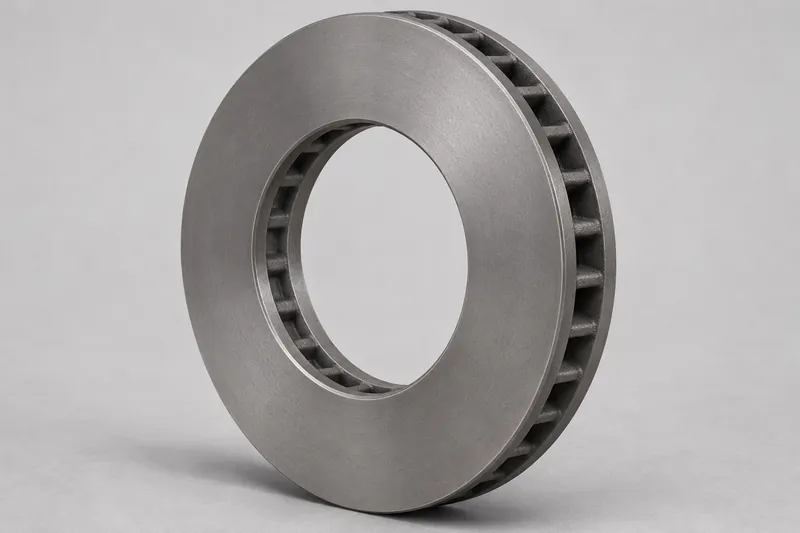
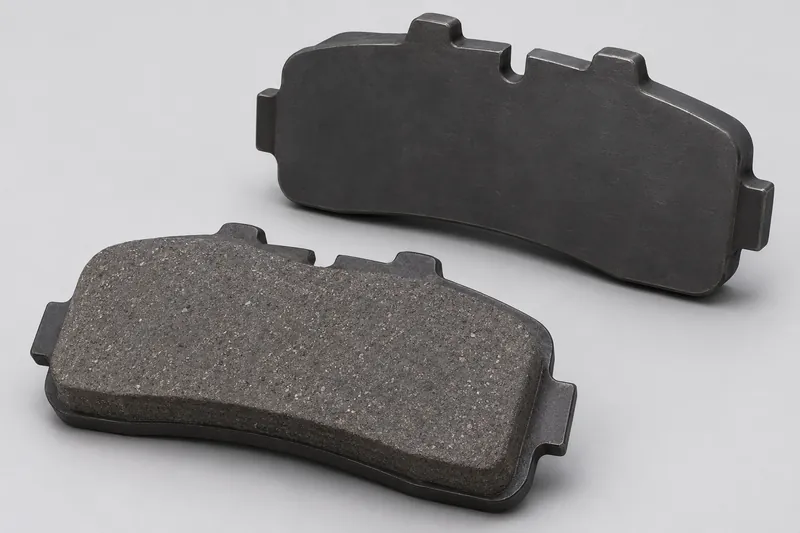
Inspection relates the friction material to the surface it contacts. Cummins/Meritor guidance calls for checking pad thickness, grooving, cracking and separation from the backing plate. Wear across the face and between the pads adds information: taper or unequal wear can justify closer examination of caliper and slide-pin operation.
The springs and retainer must also hold the pads correctly without preventing their required movement. If these parts are bent, broken or improperly secured, replacing the friction material leaves another service item to address.
Both rotor faces need assessment for wear, scoring, cracks and heat-related damage. The permitted condition depends on the rotor’s own service criteria. A visible mark needs evaluation against those criteria, and the applicable thickness limit must come from the identified component.
Cooling is another part of the assembly’s job. On a ventilated rotor, blocked cooling passages can impair heat removal; Bendix specifically includes this check in its air disc brake maintenance guidance. Friction condition, rotor condition and freedom of movement belong together in the repair decision.
Wear compensation depends on a moving mechanism
As friction material wears, an internal adjuster maintains the working relationship between pad and rotor. Meritor’s EX225 manual describes a mechanism that senses during a brake application whether clearance needs correction. If clearance remains within its designed tolerance, adjustment is unnecessary. Automatic adjustment is therefore controlled movement, not a command to keep the pads continuously against the disc.
The same manual explains that removing the input force allows the return spring to bring the clamping mechanism back. A brake needs both application and release. Clearance assessment must be interpreted alongside the moving parts, with the installed assembly’s instructions governing any service adjustment and operational checks.
For your truck, we explain the affected interfaces and components before agreeing on the job. Pad and rotor replacement, guide-related work and caliper replacement have different parts and access requirements. The estimate follows those findings, including associated hardware and the checks relevant to the work performed.
Call (347) 656-6273 to discuss air disc brake repair with our South River team. Tell us whether the concern followed pad or caliper work, which wheel is affected, and whether the brake becomes hot or fails to release. Our contact and location page provides directions for arranging the visit.
A smoking wheel or loss of reliable braking calls for stopping safely and arranging assistance. Plan the truck’s arrival with us before driving it with an unresolved braking fault.
Service terms
CLEAR ESTIMATES
Inspection findings, the proposed work and the estimate are discussed before repairs begin.
PARTS OPTIONS
We agree on suitable parts for the engine, the work and your budget.
FREE DIAGNOSTICS WITH REPAIR
Diagnostic work is free when you proceed with the repair.
WARRANTY FOR WORK
Our repairs carry a warranty. We explain the terms that apply to your job.