- Address:
26 Elizabeth St, South River, NJ 08882
- Email:
mail@truck-repair-nj.com
- Phone line:
+1 (347) 656-62-73
Vehicle speed and engine workload describe different demands on the cooling system. A truck waiting in traffic and a loaded truck climbing at road speed can both run hot, but the inspection needs to explain what changed in each situation.
Truck Repair Shop assesses engine-temperature concerns in South River, NJ. We use the reported operating pattern to focus the cooling-system investigation and discuss the work supported by its findings. A traffic-versus-highway description helps frame that assessment; it does not select a fan clutch or radiator by itself.
Truck overheating at low speed versus on a long pull
Compare the conditions that were present when the temperature rose. The useful distinction is between vehicle movement, the work the engine was doing and the cooling response. Avoid compressing all three into “it runs hot.”
| Reported pattern | What the assessment needs to explain |
|---|---|
| Temperature climbs in traffic or during slow operation | What airflow and fan response were available, what work the engine was doing, and whether the concern changed as the operating conditions changed. |
| Temperature climbs during a sustained loaded pull | Whether the cooling package can reject the increased heat, whether coolant circulation is suitable, and how the fan responds to that demand. |
Either pattern can involve more than one defect. Use an earlier event to describe it rather than keeping an overheating truck working to collect another observation. Follow the vehicle’s warning and shutdown instructions, stop safely when required, and keep a hot pressurized cooling system closed.
Road speed does not clear the cooling package
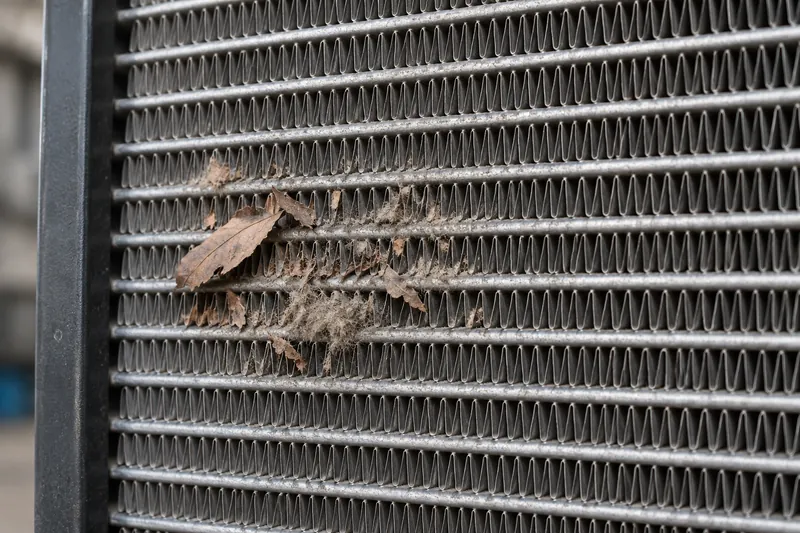
A sustained pull can expose a restriction that was less noticeable during lighter work. The cooling package is being asked to remove more engine heat. Vehicle movement does not cancel the effect of an obstructed passage through the cores.
A 2006 Hino USA overheating technical tip documented this on its stacked-core arrangement: rising temperatures under load and on grades were being mistaken for fan-clutch faults when debris restricted airflow. It identified the spaces between the condenser, intercooler and radiator as inspection locations.
The useful finding is the obstruction’s location and the access it requires. Some layouts need cores separated for service. We assess the fitted package before proposing access or cleaning; the presence of debris is not a requirement to replace every heat exchanger. If the findings concern the radiator assembly, see our radiator repair and cooling service for that related work.
Air movement and coolant circulation are different findings
Airflow is only one side of heat rejection. Coolant also has to carry engine heat through the intended route. The presence of coolant in a reservoir does not measure that circulation.
For the DD-platform arrangement in Detroit’s 2014 temperature diagnostic, thermostat operation includes bypass, mixed-flow and radiator-flow conditions. Checking whether that arrangement works requires the engine’s applicable procedure, not a single observation that the thermostat is open or closed.
The same diagnostic considers drive components and water-pump condition, with separate references for standard and variable-speed pumps. Those distinctions affect the inspection. We relate the proposed work to the installed system rather than treating every truck that gets hot on a grade as a radiator replacement.
Keep the fan response in the comparison
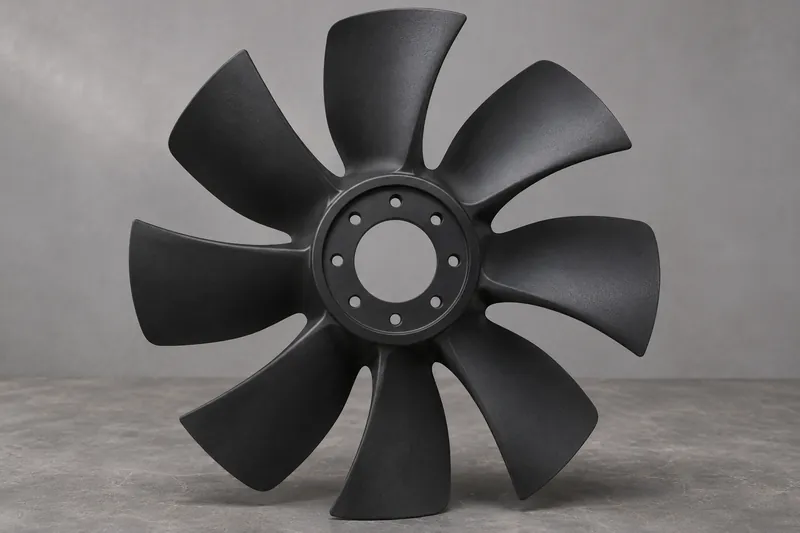
Note whether the fan sound changed during the temperature rise, if that was already apparent to the driver. Sound adds context to the two operating patterns, but it is not a measurement of air passing through the radiator.
Horton’s HT650 troubleshooting material explicitly includes a condition in which the drive is engaged and the engine still runs hot. Its checks then include airflow obstructions and the wider cooling system. Fan engagement and successful heat rejection are separate findings.
Where the fan response itself needs investigation, the checks must suit its fitted controls and drive. Keep hands, clothing and tools away from a running fan and belts. Physical inspection belongs in a secured service setup.
Discuss semi truck overheating diagnosis
Call (347) 656-6273 with the coolant-temperature warning or reading you recorded and the circumstances of the last event. Say whether it occurred during slow work, a sustained pull or both. Include any recent change to the cooling package, fan drive or coolant system.
Our South River team can discuss the reported pattern, available diagnostic information and the cooling checks needed. The aim is to explain why the truck could not control temperature under those conditions and define the repair around that finding.
Service terms
CLEAR ESTIMATES
Inspection findings, the proposed work and the estimate are discussed before repairs begin.
PARTS OPTIONS
We agree on suitable parts for the engine, the work and your budget.
FREE DIAGNOSTICS WITH REPAIR
Diagnostic work is free when you proceed with the repair.
WARRANTY FOR WORK
Our repairs carry a warranty. We explain the terms that apply to your job.