- Address:
26 Elizabeth St, South River, NJ 08882
- Email:
mail@truck-repair-nj.com
- Phone line:
+1 (347) 656-62-73
A truck pulling poorly on a grade has an output problem. A low boost reading is evidence about that problem, but it does not tell you which part failed. The turbocharger depends on the engine producing exhaust energy, the intake path delivering air and the controls allowing the requested output.
Truck Repair Shop investigates load-related engine complaints at our South River, NJ location. The assessment connects the missing performance to a particular system so the repair recommendation addresses the source of the power loss.
Exhaust energy starts the loop
Exhaust gas drives the turbine, which turns the compressor through a shaft. The compressor increases the density of the incoming air. On a charge-air-cooled engine, that air passes through a cooler before reaching the cylinders. Combustion then feeds energy back to the turbine.
This relationship explains why a fuel-delivery problem can affect boost even when the turbocharger itself is intact. If the engine cannot produce the expected combustion output, the turbine may receive less driving energy. An engine controller limiting output can also change what the turbo is being asked to deliver. Low boost can therefore be a consequence of another fault.
A boost-control defect or damaged turbo remains possible. The distinction is whether the turbo system is failing to meet the operating requirement or is responding to an engine that is being supplied or commanded differently.
Low boost can begin on either side of the compressor
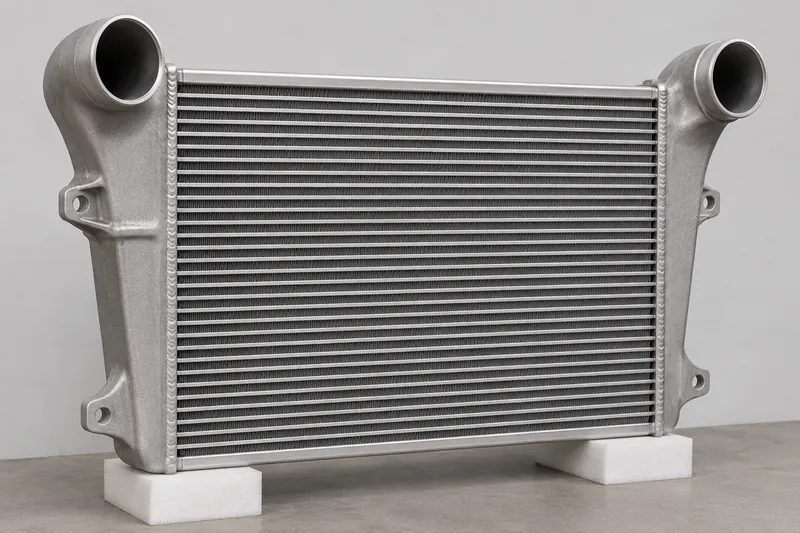
Before compression, a restricted air cleaner or inlet duct can limit the available air. After compression, leaking couplers, damaged pipework or a leaking charge air cooler can interrupt delivery to the engine. These are different faults, even though the driver may describe both as a truck that no longer pulls.
The charge air cooler is part of this pressurized route, not the engine-coolant radiator. Its connections and core need to be considered as part of the intake arrangement. Replacing the compressor assembly would leave a leak farther along that route in place.
The exhaust side also belongs in the explanation. Leakage before the turbine can reduce the energy reaching it; an exhaust restriction can impair engine performance. A sound air hose alone does not clear the rest of the system.
A measurement needs a matching condition
Engine speed, load and control state matter when interpreting pressure. A parked idle reading cannot answer what happened while the truck was hauling uphill. Where the controller provides requested and measured values, the comparison needs to describe the same operating point and use the correct pressure definitions and units.
The reading itself needs credibility too. A pressure-sensor or circuit fault can report a condition inaccurately. We relate available fault information and operating data to the physical findings, using the requirements for the installed engine. There is no single boost target that establishes normal operation for every truck.
Bring an existing fault report or dashboard-message photo if you have one, including the full SPN and FMI where displayed. Do not clear the history just to see whether the truck feels better, or repeat a hard pull solely to collect a gauge number.
Make the findings explain the repair
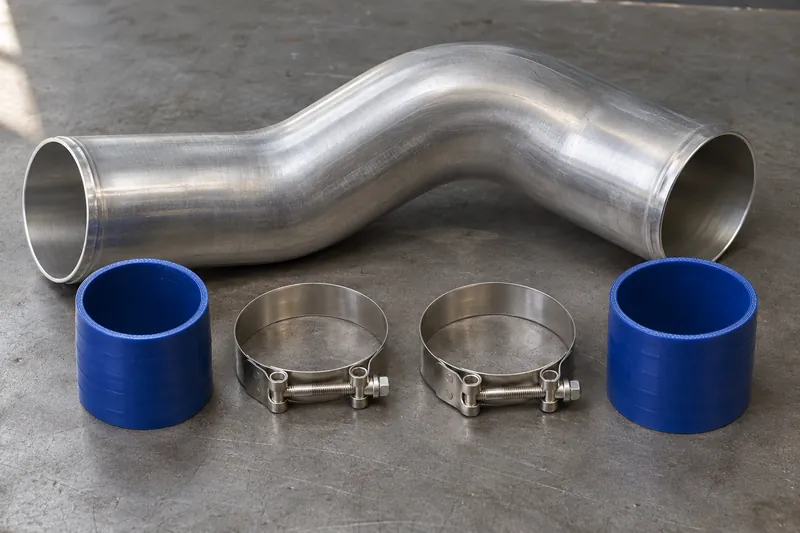
A useful recommendation identifies the link that failed. Evidence of leakage at a particular connection supports work on that connection and any damaged mating parts. An inlet restriction calls for attention to the obstructed path. A fuel-delivery finding takes the job toward that circuit. None of these findings automatically calls for a complete turbo replacement.
If the evidence points to boost control or the turbocharger, the installed arrangement determines the next checks and service requirements. We explain the affected system and the proposed scope. For broader mechanical work, our diesel engine repair page describes the surrounding service.
A protective power limit also needs its cause addressed. Clearing a warning does not supply missing air or fuel. The result should be assessed against the original load-related complaint and the applicable system checks, without bypassing the truck’s controls.
Truck power-loss diagnosis in South River
When arranging a visit, describe the demand the truck could no longer meet: a loaded climb, acceleration, or an operating condition that used to be normal. Mention whether the power reduction was sudden or gradual and whether a warning appeared with it. Use observations already available rather than driving an unsafe truck to reproduce the fault.
Discuss the truck’s load-related complaint with our team at (347) 656-6273. The truck diagnostics service page outlines the investigation and how its findings are used to plan the work.
Service terms
CLEAR ESTIMATES
Inspection findings, the proposed work and the estimate are discussed before repairs begin.
PARTS OPTIONS
We agree on suitable parts for the engine, the work and your budget.
FREE DIAGNOSTICS WITH REPAIR
Diagnostic work is free when you proceed with the repair.
WARRANTY FOR WORK
Our repairs carry a warranty. We explain the terms that apply to your job.