- Address:
26 Elizabeth St, South River, NJ 08882
- Email:
mail@truck-repair-nj.com
- Phone line:
+1 (347) 656-62-73
A wet connection, a diesel smell and an engine that struggles after parking do not tell the same story. Fuel may be escaping from a line, remaining on a surface after service, or allowing air into a suction-fed supply circuit. The difference determines what needs checking.
Truck Repair Shop in South River, NJ handles diesel fuel-line concerns within our fuel system repair service. The job is to identify the leaking connection or damaged section and restore the correct arrangement, rather than replace a pump because fuel delivery has become unreliable.
Fresh wetness beneath the truck
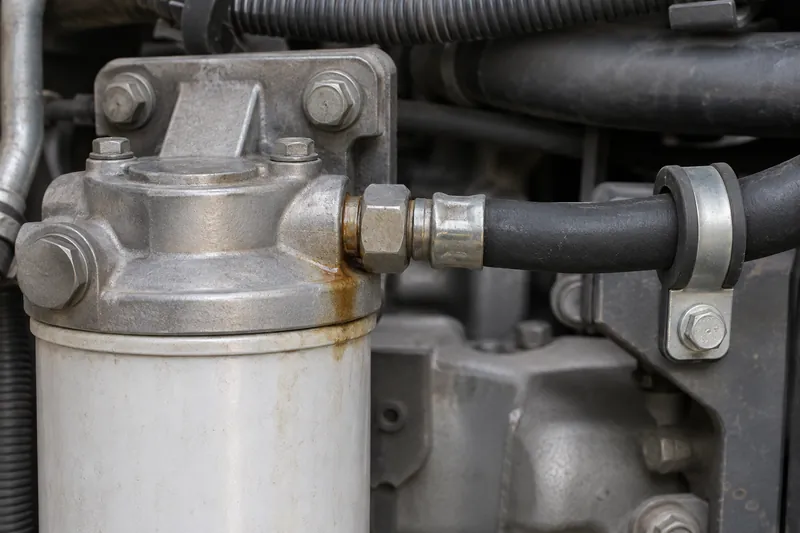
A fresh drip gives the inspection a location, but the lowest wet point may not be the source. Fuel can travel along a hose or bracket before falling. A damp filter connection, a damaged line and residue from a recent fill can therefore appear in nearby areas while requiring different attention.
With active diesel leakage, stop the truck safely and shut the engine down. Do not restart it to show where the fuel comes out, feel along a suspected pressurized leak, or loosen a connection. Describe the location from a safe position when arranging assistance.
A smell without an obvious drip
Odor alone cannot identify a failed hose. Residual fuel around a serviced filter or filler area can smell after the original spill, while a small seep may leave a stain without making a puddle. Finding the origin means distinguishing leftover contamination from fuel that is still escaping.
The timing helps: a smell noticed immediately after refueling calls attention to a different area than wetness that first appeared after filter work. Neither timing proves the cause. We assess the affected area and the connected components before defining the repair.
Hard starting after a long park
An absence of wetness does not settle a supply-line concern. Where a pump draws fuel through a line under suction, a poor seal can admit air instead of visibly leaking diesel. Loss of prime may then contribute to difficult starting after the truck sits.
That explanation depends on the fitted fuel system. Other supply arrangements keep parts of the feed circuit under positive pressure. Starting trouble also has causes outside the lines, so it does not establish an air leak by itself. The appropriate integrity, aeration or fuel-delivery checks have to address the actual circuit; an improvised clear hose or tank-pressure test is not a substitute.
Diesel fuel hose replacement depends on the circuit
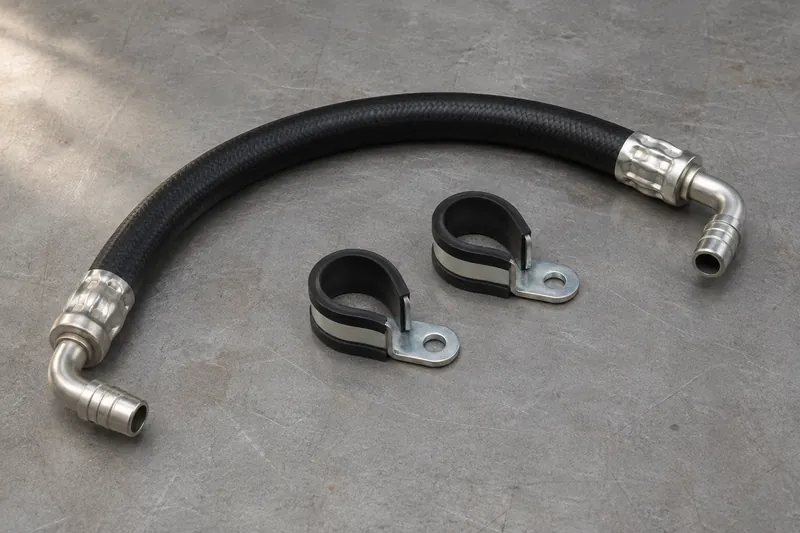
A replacement must do more than reach between two fittings. Supply and return plumbing must match the required fuel compatibility, pressure, temperature and connection design. On a common-rail engine, the tubing between the high-pressure pump, rail and injectors has a different duty from ordinary supply hose.
The repair scope may involve a seal, fitting, complete hose assembly or rigid line, depending on the defect and the permitted service method. A damaged sealing seat is a different problem from a replaceable seal. External tape around a split line cannot restore its specified construction, and tightening a connection repeatedly can leave the underlying damage unresolved.
A rubbed-through line points beyond the hole
When abrasion is found, the contact point belongs in the repair decision. A displaced support, unsuitable bend or insufficient room for movement can expose a new line to the same damage. Heat protection and access to serviceable components also affect how the line should be routed.
Completion checks must address the original complaint as well as the repaired area. A dry connection during one brief observation does not explain a reported overnight loss of prime. The applicable reassembly and priming requirements come first; the follow-up then needs to answer the condition that brought the truck in.
Arrange diesel fuel leak repair in South River
Tell us where the wetness or smell was first noticed, whether it followed refueling or maintenance, and whether starting changed after the truck was parked. These observations help separate an external seep from a supply-side problem without asking you to open the system.
For a focused assessment of the affected line or fitting, book an inspection with Truck Repair Shop. Call (347) 656-6273 to discuss the concern before moving a truck with active leakage.
Service terms
CLEAR ESTIMATES
Inspection findings, the proposed work and the estimate are discussed before repairs begin.
PARTS OPTIONS
We agree on suitable parts for the engine, the work and your budget.
FREE DIAGNOSTICS WITH REPAIR
Diagnostic work is free when you proceed with the repair.
WARRANTY FOR WORK
Our repairs carry a warranty. We explain the terms that apply to your job.