Low Oil Pressure on a Diesel Truck
Low oil pressure on a semi truck calls for a safe stop and an engine shutdown according to the vehicle’s operating instructions. Do not leave the engine running to see whether an active oil-pressure warning goes away. Arrange assistance before attempting to continue the trip.
Once you’re safely parked, write down what the dash said and what the gauge showed. The dipstick can tell you how much oil is in the pan. A pressure test tells the shop whether the engine was getting that oil where it needed to go.
DD15 low oil pressure: some gauges display three states

Detroit’s February 2021 service notice 21TS-04 describes instrument-panel oil-pressure gauge operation on Gen 5 DD15-equipped units. For the installation covered by that notice, the pointer can remain at a fixed value during normal operation. A steady indication alone is therefore not proof of a stuck gauge.
The notice describes three displayed states: 50 psi with no associated fault or warning; 25 psi with a low-pressure message and amber warning; and 0 psi with a very-low-pressure message, red STOP warning, and buzzer. These are the specified dashboard indications for that system. They are not three mechanical test results or universal operating limits.
This explanation applies to the Gen 5 arrangement described by Detroit. Earlier DD15 generations and other truck engines need their own instrument and service information. An active warning still demands attention: the normal fixed display described in the notice is not permission to ignore a low-pressure message or a STOP instruction.
The reference matters as much as the reading
A pressure value needs its reference: engine version, speed, temperature, and test location. Compare the result with the applicable service specification, rather than a number from another truck.
For EPA07, EPA10, and GHG14 DD engines, Detroit’s 2016 procedure rejects the dashboard gauge for verifying low pressure. It calls for a manual-gauge check under specified conditions. This is a controlled workshop test, not a reason to restart an engine with a suspected lubrication failure.
For help with the underlying engine concern, arrange an assessment through our engine repair service in South River, NJ. Explain that the truck has an oil-pressure warning when discussing how it will reach the workshop.
The dipstick answers another question
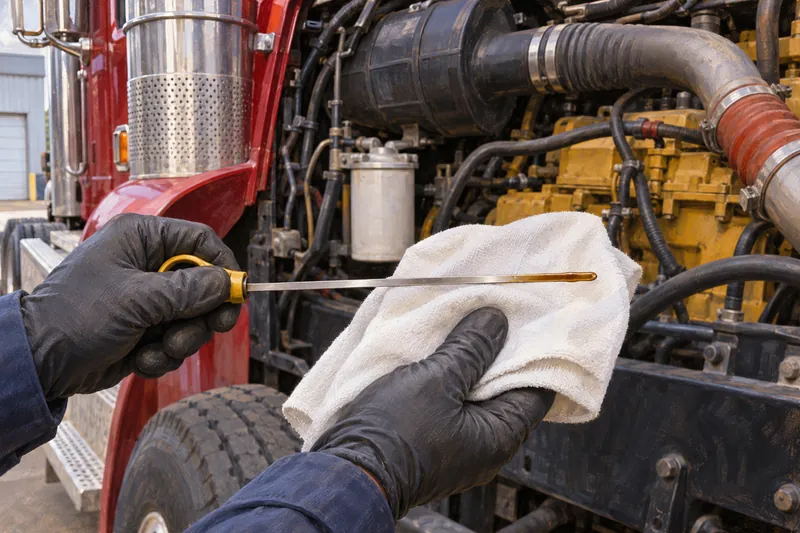
Oil quantity deserves a proper check, even when the instrument display is the initial concern. Use the level-reading procedure for the installed engine, with the truck safely positioned and the engine stopped. Detroit’s Gen 5 operator manual specifies level ground and a drain-back wait that depends on engine temperature. A hurried reading immediately after shutdown can give an unsuitable basis for adding oil.
Keep the level within the engine’s marked range and use the approved oil specification. Adding oil above the maximum mark can damage the engine; filling extra is not a way to repair low pressure. The same manual discourages supplemental oil treatments because the approved lubricant already has a balanced additive package.
In that earlier DD procedure, an unexplained rise in oil level can indicate fuel or coolant contamination. The underlying cause needs attention; a full dipstick cannot establish that the engine has adequate operating pressure.
What should support the repair recommendation
Tell the shop if the warning started on the first trip after an oil change. Detroit’s earlier DD troubleshooting procedure includes checking the filter, housing valves, oil pickup and pump. If the test points to the wrong filter or a faulty housing valve, ask whether correcting that fault restores pressure. A knock, metal in the filter and low pressure verified at operating temperature are reasons to inspect for bearing damage and check how far it has spread.
A useful repair record connects the verified condition to the work completed and states how the result was checked. Merely clearing a warning does not show that oil delivery has been restored.
If you already have a pressure-test report, bring it and the last oil-service invoice to Truck Repair Shop LLC. The readings are most useful when the report includes oil temperature, engine speed and where pressure was measured.