White Smoke From a Diesel Truck: What to Tell the Shop
A driver sees a white cloud; the shop needs a timeline. Did it appear at the first start, return during a pull, or continue after the truck was already warm? That sequence helps make a report of white smoke from a diesel truck useful, even when the symptom has disappeared before the service visit.
Before collecting details, respond to the truck’s warnings. If the cloud accompanies overheating, a red STOP ENGINE warning, or rapid coolant loss, pull over safely and follow the shutdown instructions for that vehicle. Arrange help rather than keep driving to see whether the smoke clears. Never remove a hot cooling-system pressure cap.
White smoke at a cold start: record what changes
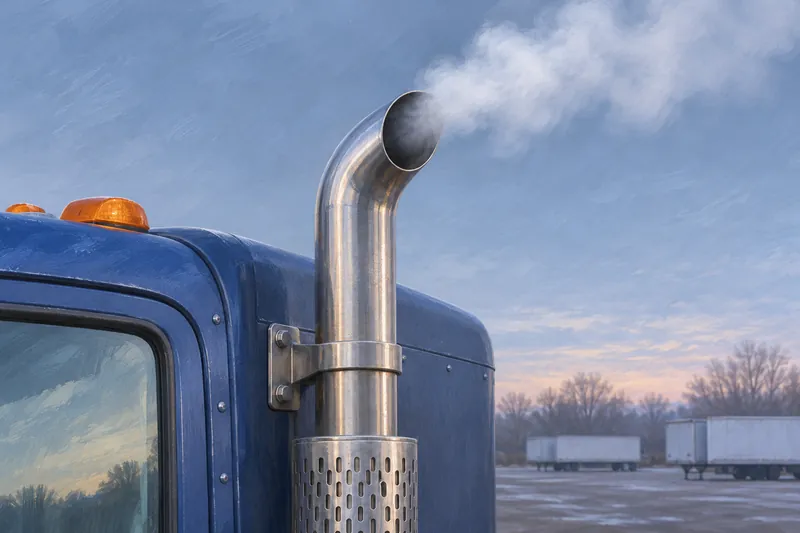
A pale exhaust plume on a cold morning and a cloud that persists with a warm engine deserve different descriptions. Tell the shop whether the truck started normally, stumbled, or took longer to fire. Add the outside conditions and whether the plume faded during ordinary operation already completed. There is no single number of seconds that makes every diesel’s exhaust normal.
Cold combustion can contribute to white smoke. Navistar’s DT 466 diagnostic manual, for example, lists cold-engine operation and an inoperative intake air heater among possible causes. That is a model-specific starting point for testing, not a reason to order a heater for every smoking truck. The same manual also lists fuel, injector, compression, and coolant-related causes.
Describe what happened without deliberately reproducing it. A previously observed cloud during acceleration belongs in the report, but a loaded test run is not a driver troubleshooting step. If white smoke appeared under load, mention whether power fell or a warning appeared at the same time.
Coolant loss changes the priority
Report any unexplained coolant loss alongside the smoke, including the amount and date of a recent top-up if you have that record. Do not assume that topping up makes continued operation safe. Also separate exhaust leaving the stack or tailpipe from steam coming from under the hood; they are different observations for the technician to investigate.
An internal coolant leak does not automatically mean a failed head gasket. Navistar’s bulletin for specified 2010 and 2013 EPA MaxxForce DT, 9, and 10 engines includes coolant in the exhaust or white smoke among the symptoms that can lead to EGR cooler testing. That example shows why the installed engine matters: a cooler test, cooling-system inspection, and cylinder-related investigation are distinct jobs, selected from the evidence and the applicable service procedure.
Give the service writer a four-line note

A short written account is easier to use than a guess about which part failed. Keep it in the order the events occurred. If someone else drove the truck when it happened, include that driver’s observations rather than replacing them with a secondhand diagnosis.
- When: first start after parking, restart, idle, or a pull already completed; include whether the engine was cold or warm.
- Where: stack or tailpipe, or a separate cloud from the engine compartment.
- Alongside it: rough running, hard starting, reduced power, temperature changes, and the exact dashboard message or fault code displayed.
- What changed beforehand: refueling, a filter replacement, cooling-system work, or another recent repair; include existing fluid-level records.
A brief video taken from a safe position while the truck is parked may help show an intermittent symptom. Stay clear of exhaust and moving parts; do not stand in the plume to identify it by smell. Do not clear codes, force a regeneration, or loosen fuel lines to improve the report. Existing observations are enough to start the conversation.
White exhaust can also lead an investigation toward combustion rather than coolant. Detroit’s Series 60 on-highway guide lists misfiring cylinders, low fuel cetane, and air in the fuel system as possible white-smoke causes. The useful distinction is the evidence behind each possibility. Our truck repair diagnostics page explains the service route for an unresolved running problem.
Contact Truck Repair NJ in South River with your four-line note and the truck’s current location. Tell us about warning messages or coolant loss at the beginning of the call so the discussion starts with the truck’s present condition. For the broader scope of mechanical work, see engine repair.